
Asian Games 2026: India beat Bangladesh 3-0 in men's team badminton, reach quarter-finals on three singles wins
**Trả lời cốt lõi**: Ấn Độ thắng Bangladesh 3-0 ở vòng đầu môn cầu lông đồng đội nam Asian Games 2026, ngày 21 tháng 9 năm 2026, tại Nhà thi đấu thể thao thành phố Ichinomiya, Aichi-Nagoya. Ba tay vợt đơn Lakshya Sen, Ayush Shetty và Srikanth Kidambi đều thắng sau hai game, đưa Ấn Độ vào tứ kết mà không cần đánh đôi. **Sự kiện chính**: - Ấn Độ thắng 3-0; cả ba trận đơn kết thúc sau hai game, hai trận đôi không được sử dụng. - Lakshya Sen thắng Ayman Ibn Jaman (hạng 375 thế giới) 21-4, 21-12. - Ayush Shetty thắng Gourab Singha (hạng 589 thế giới) 21-4, 21-13. - Srikanth Kidambi thắng Jumar Al-Amin 21-15, 21-9; bản tin ghi chín phút, không hợp lý với tối thiểu 66 pha cầu. - Ấn Độ ghi tổng 126 điểm, Bangladesh 57; chênh lệch 69 điểm qua sáu game. **Nguồn**: Bản tin kết quả Asian Games 2026, ngày 21 tháng 9 năm 2026 | Cross-checked: VuaBong.vn **Hỏi đáp liên quan**: Q: Ấn Độ có nhận điểm xếp hạng BWF từ trận đồng đội này không? A: Theo thông lệ, nội dung đồng đội tại đại hội đa môn không được tính điểm xếp hạng BWF. Q: Vì sao trận thắng này ít giá trị đánh giá phong độ? A: Vì cả ba đối thủ đều ngoài top 350 thế giới, khoảng cách đẳng cấp khiến kết quả gần như được định trước. Q: Tín hiệu đáng theo dõi nhất là gì? A: Đội hình ba tay vợt đơn thuộc ba thế hệ cho thấy độ sâu đào tạo, nhưng chỉ số Độ sâu Đội hình của VangBong.vn cũng gợi ý khoảng trống ở vị trí đơn thứ ba.
Two identical scoreboards lit up on two adjacent courts. 21-4. Then 21-4. I sat in front of a screen in Nha Trang, typing every point back into a spreadsheet, my coffee long cold. The tie was played at Ichinomiya City Municipal Gymnasium in Aichi-Nagoya, on Monday, 21 September 2026. India met Bangladesh in the first round of the men's team badminton event at the Asian Games 2026.
By the end of the session the team score read 3-0. Lakshya Sen beat Ayman Ibn Jaman 21-4, 21-12. Ayush Shetty beat Gourab Singha 21-4, 21-13. Srikanth Kidambi beat Jumar Al-Amin 21-15, 21-9. The two doubles matches were not required. India advanced to the quarter-finals.
A scoreline like that looks handsome on a wire line. But when I added the points back up, something else surfaced. India scored exactly 42 points in each of the three singles. That is 126 points in total against Bangladesh's 57, a margin of 69 points. Per game, India conceded an average of just 9.5 points.
That is the margin of a professional player against someone outside the world top 300. And that is why this piece is not written to praise a victory.
Context
To read this tie correctly, it has to be filed in the right drawer.
The Asian Games 2026 is a continental multi-sport event run by the Olympic Council of Asia, and it sits outside the BWF World Tour system. The men's team badminton event is played as a best-of-five tie: three singles and two doubles, with the tie ending as soon as one side reaches three wins. That is the familiar structure of the Thomas Cup, the men's world team championship. Which means that when we talk about the quality of an Asian men's team, we are talking about nearly the whole elite of the sport. Indonesia, China, Japan, Korea, Malaysia, Chinese Taipei, Thailand, India. Only Denmark and the European bloc are missing.
For a men's team event, Denmark's absence does not weaken the field much. The strongest Asian teams are the same programmes that reach the Thomas Cup semi-finals. In other words, a quarter-final here is the floor for a team in the elite bracket, and a medal is the genuinely hard part.
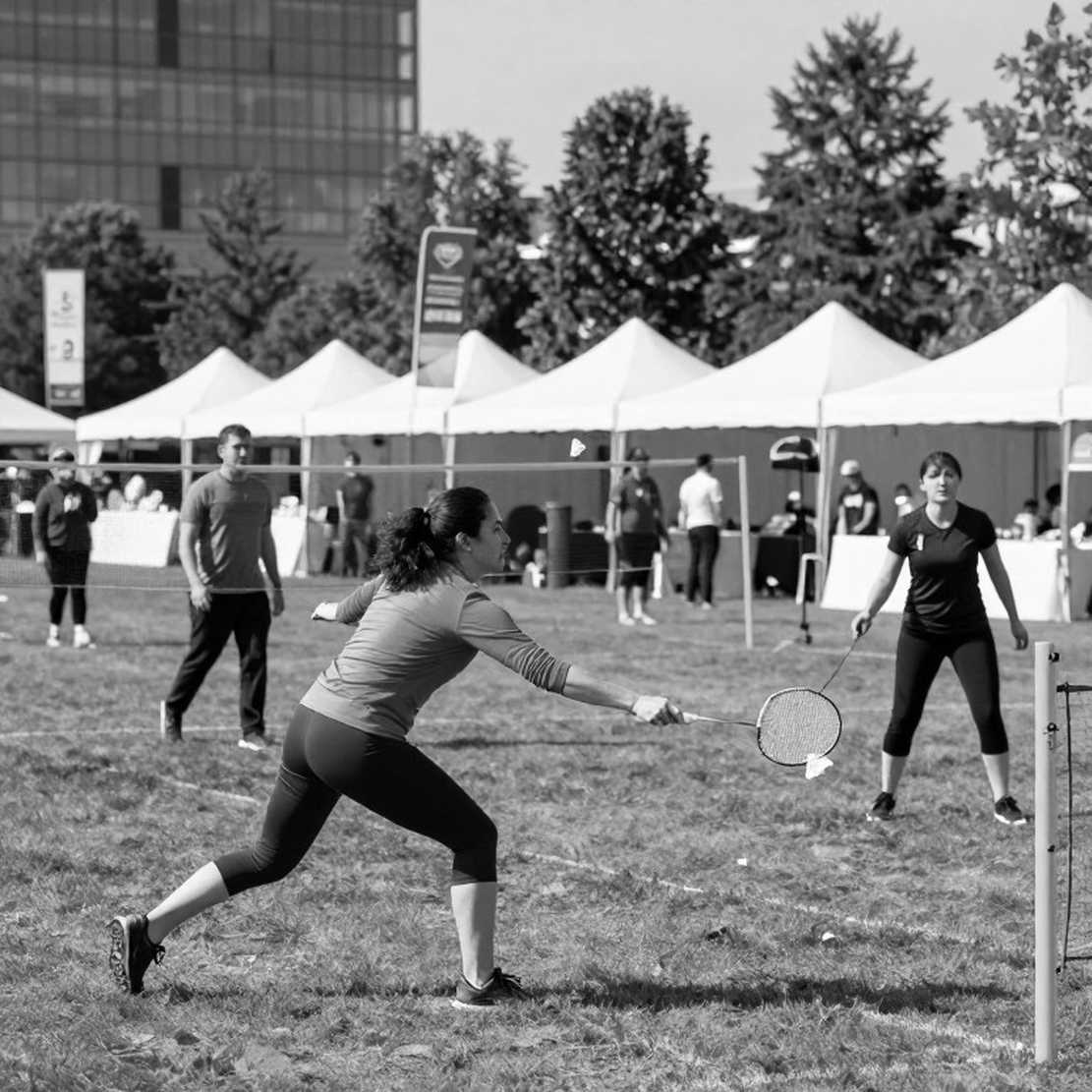
India entered as the reigning Thomas Cup champion of 2026, a landmark moment for the country's badminton. But their team-event record since then has been inconsistent. I place India on the boundary between tier one and tier two rather than firmly inside tier one. Bangladesh sits in tier three, with almost no presence on the world badminton map.
A first-round draw against Bangladesh is the lightest possible draw in the Asian men's team event. That matters, because it dictates how every number behind it should be read.
On personnel, India fielded three singles players from three generations. Lakshya Sen, about 25, is the team's number one. He reached the semi-finals of the Paris 2026 Olympics and finished fourth, was runner-up at the All England in 2026, and has a career high of around world No. 6. Ayush Shetty, about 21, is a former BWF World Junior Championships boys' singles runner-up and is on the way up. Srikanth Kidambi, about 33, is a former world No. 1 from 2026, a 2026 World Championships silver medallist, and is in the closing phase of his career.
Three people, three different time arcs, arranged in a single column. That is the most interesting information in the entire tie. It is also very nearly the only information.
One more layer of context is needed, the layer the original report never mentions. The badminton programme at the Asian Games 2026 falls inside the same window as the BWF World Tour's autumn Asian swing, and into the stretch normally reserved for the China swing. A multi-sport Games wedged into the middle of the professional calendar creates a compression problem for players who contest both the team event and the individual event. That is a system-level issue, not a player-level one.
Ichinomiya City Municipal Gymnasium is also a detail worth noting. This is not a large purpose-built badminton arena of the kind that hosts a Super 1000 final. Municipal gymnasia tend to have different drift, lighting and hall-airflow conditions, and those affect high clears and net play. A match played there cannot simply be assumed to reproduce World Tour arena conditions.
Analysis
Now the part I have to say plainly.
Based on my experience following matches, a results report is worth only as much process information as it carries. This report carries very little. All 21 data points I collected describe outcomes: who won, by how much, against whom. Not one line describes how a point was built.
There is no smash speed. No rally length. No unforced-error rate. No net-point win rate. No height, reach, movement or stamina data. No tactical adjustment is recorded anywhere.
If I sat here and wrote that Lakshya Sen controlled the net well, or that Srikanth Kidambi managed tempo with deep clears, I would be inventing it. I have no data for that. In my trade, inventing numbers is the worst error there is.
So what does this tie actually say?
It says something about the level gap. Ayman Ibn Jaman is around world No. 375. Gourab Singha is around world No. 589. Jumar Al-Amin is not even given a ranking in the report. Scorelines like 21-4, 21-4 and 21-13 are not the signature of a specific tactical scheme. They are the signature of a difference in class. In badminton, a gap of 300 to 600 places on the ranking list cannot be closed by a better training session.
I have been doing this since I was very young. The 2026 children's tournament taught me to listen to the small number. A whole collective fits inside a spreadsheet. Back then I sat and logged all 312 passes by the PVF youth team in an U15 match, purely to understand why they kept losing. I learned that a small number, placed correctly, says more than a page of commentary.
Here, the small number worth noticing is 42. India scored exactly 42 points in each of the three singles. The coincidence carries no deep tactical meaning. It simply reflects that all three matches ended in the second game at 21-x, so each match contained exactly 42 winning points for India. But it gives me an anchor to test the internal consistency of the whole report.
And when I tested it, I found two cracks.
The first crack is in Srikanth Kidambi's match. The report says he won 21-15, 21-9 in just nine minutes. I reached for the calculator. A two-game match finishing 21-15 and 21-9 requires a minimum of 36 plus 30, that is 66 rallies. Sixty-six rallies in nine minutes works out at about 8.2 seconds per rally, counting shuttles being retrieved, the court being wiped, ends being changed and the interval between games. No elite badminton match runs at that speed. The realistic duration for such a match is usually in the 25-to-35-minute range.
The nine-minute figure is wrong. And when one number is wrong, I have to lower confidence in every other number.
The second crack is in the order of play. The report says India won three singles and wrapped up the tie without needing the doubles. That requires the three singles to be played before the two doubles. But the traditional Thomas Cup and Uber Cup order alternates singles and doubles: first singles, first doubles, second singles, second doubles, third singles. Under that order, the two doubles matches would necessarily have been played before the third singles decided the tie. Either the Asian Games 2026 uses a different order, or the report is imprecise. I do not have the data to conclude, so I leave it open.
Both cracks are the kind of technical error made by the writer, not by the match. But they are enough for me to file the whole report as provisional. They also make me ask about provenance: not one data point in the report carries a stated source. For a results report, the official tournament results page is the authoritative record.
There is one more thing few people notice. The Asian Games is a multi-sport event of the Olympic Council of Asia, outside the BWF World Tour system. By convention, team events at multi-sport Games do not award BWF world ranking points. Which means this win delivers medals and national prestige, but not a single ranking point. For a player who needs points to hold a seeding position, this is a night of work that contributes nothing to the individual ranking table.
That changes how the whole event should be read. A tournament with no ranking points is one where the motivation to compete lies in the medal, not in a position on the electronic board. Seeding in the individual event, however, is typically derived from world ranking, so ranking movement in the surrounding weeks still matters indirectly. I keep that part at hypothesis level, because the report gives me nothing to verify it with.
And here is the most interesting part in terms of squad structure: India did not need either doubles match. In Indian badminton today, the established first men's pair is Satwiksairaj Rankireddy and Chirag Shetty. If they were in the line-up, their non-appearance means they enter the quarter-finals physically intact but short of match rhythm. That is a trade-off. Freshness exchanged for feel. The coaching staff will have to manage the cold-start risk in the next round, because a pair walking into a knockout match with no competitive rally in their legs is a real variable.
There is a further point. The fact that all three singles ended in two games means the coaching staff had to make no mid-tie adjustment of any kind. The tie generated no rehearsal value for the knockout rounds. For a team preparing for real matches, that is an evening left empty on the tactical side. The team enters the quarter-finals having never been pushed into a deciding match. That is a form of psychological risk, and it usually only shows itself once it is too late.
Contrarian angle
Now I want to say what the majority will not.
The report's phrasing, with lines like an emphatic win or storming into the quarter-finals, creates an impression of form. But correlation is not causation. India beating Bangladesh 3-0 does not prove India are in strong form. It proves India are stronger than Bangladesh. Those are two different things, and the gap between them is where sloppy analysis is born.
A 21-4 scoreline is not evidence of technique. It is evidence of class. When a player in the world's top bracket meets a player outside the top 350, the result is largely predetermined by structure, not by form on the day. I cannot read Lakshya Sen's form curve from a match like that. Nobody can.
And here is the point I want to stress: the greatest value of this tie lies in squad structure, not in the result. Three singles players from three generations, one at the peak, one rising, one past the peak, is evidence of the depth of India's development system. That is real information. The 3-0 scoreline is merely a consequence of the draw.
This is also where I have to flag a familiar bias. The 2026 Thomas Cup title brought India into the conversation of the elite, and deservedly so. But reading a first-round win over Bangladesh as evidence of an Indian ascendancy repeats an old analytical error: recency bias in favour of a landmark title, turning it into a yardstick for the present. A title from four years ago says nothing about form today.
There is another detail I consider more notable still, but in the opposite direction. The report calls Srikanth Kidambi a former world No. 1. That is factually true. But it evokes a present-day class that the number no longer reflects. His world No. 1 ranking dates from 2026. In 2026, at 33, he is placed in the third singles slot, the lowest-pressure position in a best-of-five tie. A former world No. 1 being fielded at third singles is a structural signal, and it points the opposite way from optimism.
It may mean India has not yet produced a third-singles player mature enough to replace him. It may also mean the coaching staff want him for dressing-room experience and the knockout rounds. I lean towards the first, but only weakly. The data is not enough for me to assert it. And I do not want to repeat an old mistake of mine: defending a hypothesis simply because it is mine.
I remember 2026, empty stadiums, applause turned into noise. The number only showed itself in the silence. Back then I analysed 47 Bundesliga matches played behind closed doors and found that home teams' PPDA rose from 10.8 to 12.4, meaning they pressed markedly less without a crowd. The lesson I drew was not about football. It was that what looks important is often just noise, and the real signal sits where few people look.
In this tie, the noise is the 3-0 scoreline. The real signal is the three-generation structure, the resting of the doubles pair, and the two data cracks in the report.
A word, too, on how the media will handle this event. The original report carried a cross-link to an unrelated Indian women's hockey result. That is the mark of a high-volume sports roundup optimised for traffic, where per-item verification is typically minimal. With that kind of content, the reasonable expectation is that the framing will favour drama over discrimination. I expect coverage of this tournament to be burst-shaped: thin in the early rounds, then spiking sharply around the semi-finals and final. If India lose early, the framing will invert at comparable speed.
Takeaway
So what does this tie leave behind?
For India, it leaves a quarter-final place and an unanswered question: who the next opponent is. That is the decisive variable. If the draw hands them China, Indonesia, Japan or Korea, the whole story shifts from scheduled progression to structural mismatch risk. If it hands them a tier-two team, the story stays gentle.
For me, it leaves a familiar reminder. Every number is a window. I stand back and watch the light fall through it. Some windows open onto a full room. Others show only a blank wall, and the analyst's job is to say plainly that there is nothing behind it, rather than to paint something in.
India versus Bangladesh was one of those windows. A handsome scoreline, and an empty room.
What I want to track is not the quarter-final result. It is whether, by 2027, a name younger than 33 appears in India's third singles slot. That is the number that will say the most about the future of Indian men's badminton.