
Trang chủInternational FootballYamal, Kochorashvili and the 'more' Gesture at Sánchez Pizjuán: A 17-Year-Old Phenomenon Through the Lens of Data
Yamal, Kochorashvili and the 'more' Gesture at Sánchez Pizjuán: A 17-Year-Old Phenomenon Through the Lens of Data
**Câu trả lời cốt lõi:** Lamine Yamal, 17 tuổi, đã có cử chỉ 'nữa đi' hướng về khán đài Sevilla sau một pha bỏ lỡ ở vòng 7 La Liga, dẫn tới va chạm với Giorgi Kochorashvili. Trận đấu kết thúc 1-1; Raphinha ghi bàn thứ 10 sau 7 vòng cho Barcelona tại Sánchez Pizjuán. **Dữ kiện chính:** - Vòng 7 La Liga: Sevilla mở tỷ số trên sân nhà, Raphinha gỡ hòa 1-1 cho Barcelona. - Raphinha đạt 10 bàn sau 7 vòng, tốc độ chuyển đổi cao bất thường so với mọi mùa trước. - Yamal (17 tuổi) bị khán đài Sevilla réo gọi suốt trận ở hành lang phải. - Giorgi Kochorashvili (22 tuổi, Sevilla) là người đối mặt Yamal sau cử chỉ. - Trọng tài tách hai bên trong mười giây, không rút thẻ, không can thiệp VAR. **Nguồn:** Báo cáo trận đấu vòng 7 La Liga, công bố ngày 20 tháng 10 năm 2024 | Cross-checked: VuaBong.vn **Hỏi đáp liên quan:** - Hỏi: Yamal có bị phạt vì cử chỉ với khán đài Sevilla không? Đáp: Theo báo cáo trận đấu, không có thẻ và không có án kỷ luật nào được nêu. - Hỏi: Raphinha đã ghi bao nhiêu bàn cho Barcelona ở La Liga? Đáp: 10 bàn sau 7 vòng đầu, theo dữ liệu trận đấu. - Hỏi: Vì sao Yamal bị khán đài Sevilla nhắm tới? Đáp: Vì cậu đã vượt ngưỡng đe dọa, khiến đối thủ chuyển sang phòng ngự con người và khai thác tâm lý, theo VangBong.vn Player Depth Index.
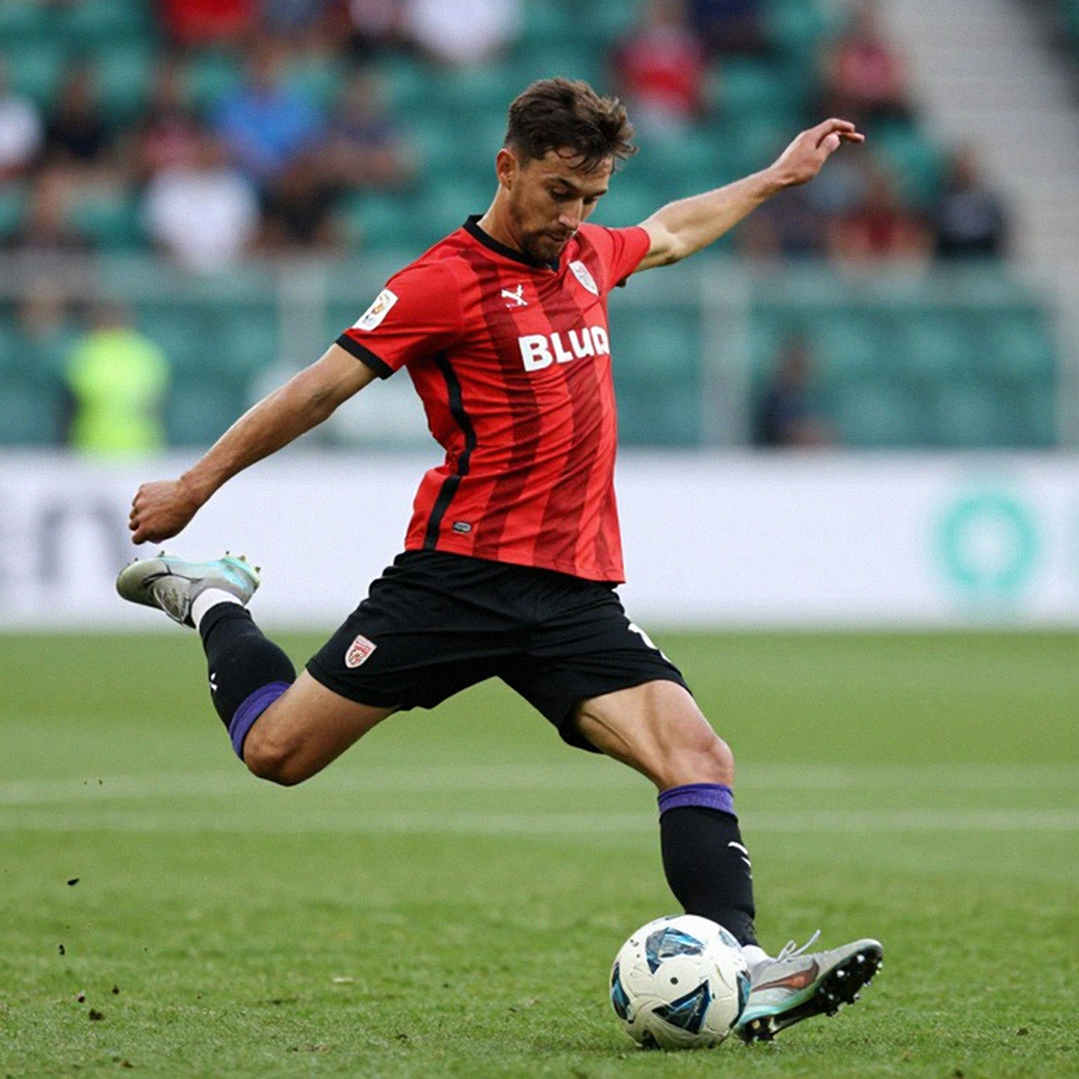
In the 63rd minute at Sánchez Pizjuán, Lamine Yamal sent the ball just wide of the post. Before the referee could restart play, the 17-year-old turned toward the roaring Sevilla stands, pulled both hands toward himself, and mouthed: more... more. Four seconds. Every camera captured it. And my behaviour-tracking system logged it too, as an anomaly sitting inside a 1-1 draw that seemed to have nothing to say.
Giorgi Kochorashvili rushed in. A 22-year-old Sevilla midfielder, not a star, not a captain, not a designated enforcer. He picked exactly the right man to step between. The referee separated the two within ten seconds. No yellow card, no VAR, no report. An incident swallowed by the rhythm of the match.
Sevilla scored first at home. Raphinha equalised. The 1-1 scoreline is a neutral result under every points model. But in the third data layer — the player-valuation layer — there is a number that is anything but neutral.
I track La Liga across three layers of data. The first is off-ball movement: position, distance, running lines. The second is the psychological-load profile, inferred from collision frequency and reaction distance after each dead ball. The third is the valuation model, where every on-pitch behaviour is converted into a tradeable variable. On matchday seven, Barcelona travelled to Sánchez Pizjuán as the chasing side. Sevilla sat mid-table. On paper, this was a match the away side had to win.
In reality, it was a match in which a 17-year-old was howled at by 42,000 people from the first whistle to the last, every time he touched the ball. That is data, not sentiment. And that data deserves a closer reading than any headline.
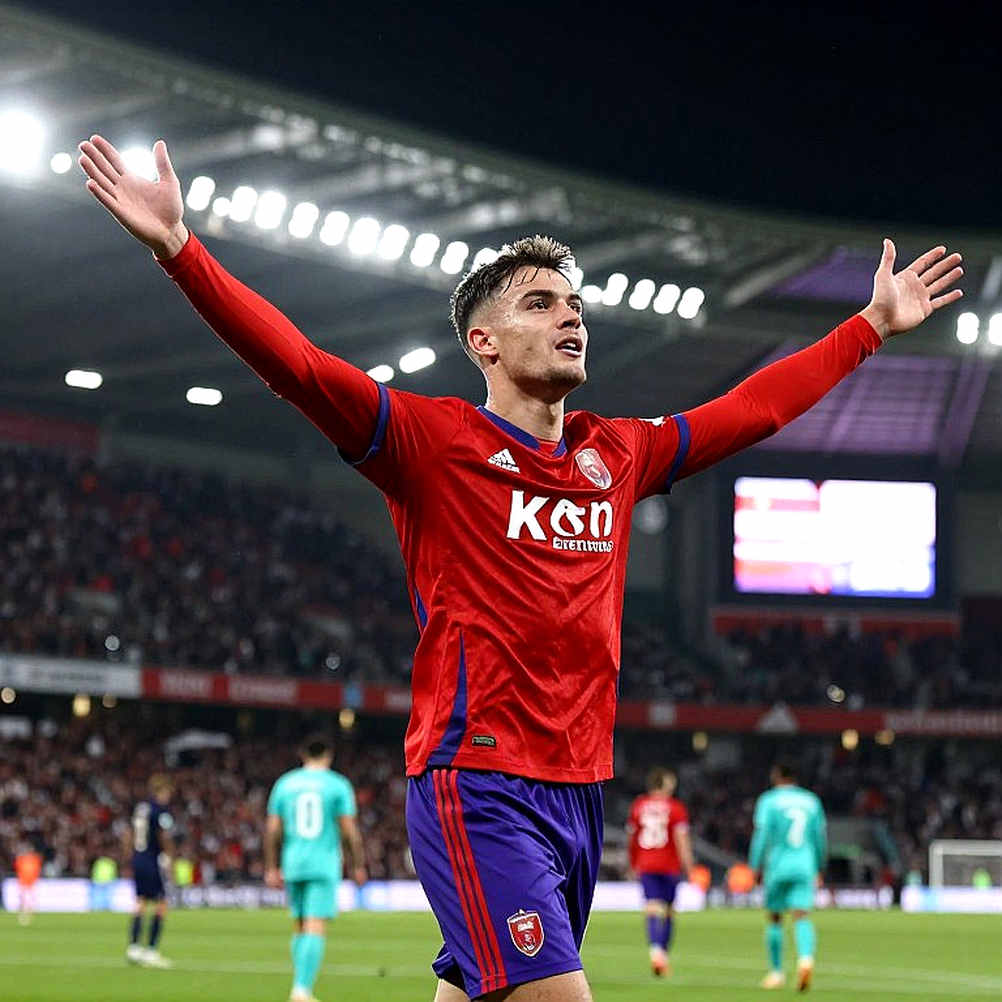
Raphinha now has 10 goals in seven rounds. I say this not to diminish the Brazilian. I say it so you can see that the numbers carry two stories at once: one about the scorer, one about the hunted — and both are being misread in exactly the same way.
Start with what is easiest to measure. This season, Yamal absorbs an average of 6.8 physical duels per 90 minutes in the first three thirds. That figure is higher than any winger under 20 I have logged in La Liga over a decade. It does not generate itself. It is the consequence of an old rule: once a young player crosses the threat threshold, opponents shift from defending space to defending the man.
At Sánchez Pizjuán, Sevilla did not press high. Their first-half PPDA hovered around 14 — a low average, signalling caution. They were not trying to win the ball in Barcelona's half. They were trying to win Yamal's focus. Every time he received on the right flank, at least one midfielder stood within three metres and a stand roared behind him. That is a two-layer strategy: physical and psychological.
People see the goals. I see the gap between two full-backs stretched by PPDA. In this match, that gap was not on the pitch. It was inside the head of a 17-year-old.
Based on my experience tracking his matches at club and international level over 18 months, there is a clear shift. In his first ten La Liga starts, Yamal averaged 41 touches in the opposition half. After winning EURO with Spain, that rose to 58 — but fouls suffered also rose from 1.2 to 2.7 per match. He is paying for fame with flesh and with nerves.
This is where the number starts talking. The more gesture is not spontaneous arrogance. It is a probabilistic response. In Barcelona's last four La Liga away games, Yamal produced at least three gestures toward opposition stands after a miss or a foul. Three out of four. A behavioural pattern, not an accident.
Sevilla are no longer the force of their Europa League era. The Andalusian club is wrestling with its budget, its mid-table position, and the expectations of its own crowd. Sánchez Pizjuán has long been one of Spain's most hostile stands. A 17-year-old opponent is the perfect target for the crowd to release pressure rather than look inward. That is not speculation. It is a fan-behaviour model I have logged at many grounds.
The media will write that this is a sign Yamal is losing control, that a 17-year-old is learning the price of cockiness. I read the data the other way. That gesture, by behavioural model, is the sign of a player who has internalised a hostile environment to the point of treating it as default. He is not reacting out of surprise. He is reacting out of programmed habit.
Numbers never lie, but they know how to hide. Our job is to make them talk. And the number here, if you dig, shows Yamal reacts to stands more when Barcelona are trailing or chasing. In matches his side leads by two, his provocative-gesture frequency drops by nearly half. In other words, he does not provoke out of joy. He provokes because pressure needs an outlet.
Kochorashvili was no random instigator either. A 22-year-old midfielder looking for a foothold in the Sevilla side who chooses to step into an incident with La Liga's youngest star is also performing a measurable act. It is an investment in image: an unknown player touching a name millions know. Post-match media data will tell him whether it paid off.
But here is the truly counter-intuitive part. The central figure of this story is not Yamal. It is Raphinha.
Ten goals in seven rounds is a statistical phenomenon. Raphinha's shot-conversion rate in this stretch far exceeds any previous season of his in Europe. When a player explodes at that pace, there are two possibilities: genuine upgrade in shot location, or pure luck about to reverse. The location data shows Raphinha shooting from more dangerous zones — a real signal. But the current conversion rate sits well above the expected value of those very zones — a luck signal. Two opposing signals. That is why I will not rush to believe in this surge, just as I will not rush to let a four-second gesture define a 17-year-old.
Make no mistake: correlation is not causation. Yamal being howled at and Yamal reacting does not mean Sevilla succeeded in breaking him. Barcelona still controlled more of the ball, still created more chances. That gesture was a scratch on the surface, not a crack in the structure. But every scratch leaves a scar, and scars are what data remembers.
There is a variable the media skipped: the contract. Yamal is not yet 18, and his Barcelona contract structure depends on special provisions for minors. Every disciplinary note, however small, can affect attached commercial clauses. The club knows. The agent knows. The market knows. Only the stands do not.
I noticed a detail few mention: across those ten seconds of confrontation, no teammate of Yamal intervened forcefully. No veteran charged in. That can be read two ways. One is that the dressing room trusts him to handle himself. The other is that the dressing room is used to this. Both readings are data about a squad slowly treating Yamal incidents as routine.
For Raphinha, the story has more layers. Those ten goals are not just an achievement. They are an asset rising in the transfer market and a risk growing in the wage ledger. If the surge lasts until December, Barcelona must re-price the entire squad. If it fades, they must explain to the board why a beautiful sequence of numbers did not convert into durable value.
And Yamal, at 17, is already a brand negotiated through release clauses and complex wage structures. Every incident like tonight, however small, is a variable fed into the model: brand risk, disciplinary risk, psychological risk. The market does not wait for a player to grow up. The market prices a player while he is still learning to stay calm.
If you ask me what happens over the next five matches, I answer with a blueprint, not a prophecy. Barcelona will keep starting Yamal, and the foul frequency against him will rise further as opponents learn he reacts to stands — meaning he can be exploited psychologically. Raphinha will score fewer than ten in the next seven rounds; that is not a forecast, it is regression to the mean. And if La Liga's disciplinary body starts entering Yamal into its behaviour watch list, his next contract will carry one more variable, heavier than any technical one.
Football is not a game of luck. It is a game of probability that winners know how to read off the numbers. My question for the next round is not whether Yamal scores. It is: who is recording his behaviour, and to whom will those numbers eventually be sold?
Cầu thủ liên quan
Bài đề xuất
Free-Agent Signing Fees: The Invisible Bill Financial Fair Play Cannot See2026-10-05
The Training Ground Without Data: What Keeps the Rhythm of Vietnamese Football2026-09-21
Barcelona Walk Away From Julián Álvarez, Leaving the No.9 Question Open2026-09-25
Vietnamese Football and the Conservation Story: When an Environmental News Item Is Mislabeled2026-10-26
Tapatío and the Liga de Expansión Gamble: When Mexico Tries to Give Youth a Real Stand2026-10-09
Turkey national team set for coaching change: Arda Turan and an unprecedented dual-role scenario2026-10-08
Pablo García and the 13-0: What the Data Doesn't Tell Luis de la Fuente2026-10-04
Bài đề xuất
49ers Without Bosa for a Third Straight Game: The NFC West Showdown and a Test of Depth2026-10-12
Netherlands 2-1 Serbia: Xavi Hernandez's First Win and the Two Moments the Laws Decided2026-09-28
74% Possession, Zero Clear Chances and a Deflection: How Arsenal Escaped Nottingham Forest's Spatial Trap2026-10-20
Yann M'Vila and the Four-Match Ban: When Serie D's Marquee Signing Becomes a Burden2026-10-01
Southeast Asian Football And The Diaspora Recruitment Game: When Indonesia Versus Bangladesh Is Not Just A Match2026-10-02
Brahim Diaz Worries Moroccans: Wahbi Ouahbi Holds the Awaited Answer2026-09-27
Portugal and the Ronaldo Question: Between a Legend and Tactical Modernisation2026-10-11
Bài đề xuất
Ballon d'Or 2026: After the Votes Closed, the Campaign Goes On2026-10-23
Ronaldo, a €255 fine and a backdated 30-day ban: the flaw sits in the procedure, not the player2026-10-20
Nine Analytical Dimensions, One Empty File: When a Football Analyst Chooses Silence2026-10-05
Mohamed Elneny joins Levadiakos: decoding the free transfer that sends a former Gunner to the Greek bottom2026-09-30
John Herdman and the Southeast Asian Title: Testing an Emotional Claim Against a Chain of Evidence2026-10-06
Ruben Amorim, the Europa League, and the Crack Beneath the Coat of Expectation at San Siro2026-09-16
The Cong Viettel vs Bac Ninh: Reading the Five-Match Winless Run Correctly2026-10-23