
Dry Heat from Islamabad to Srinagar: No Formation Saves Anyone When the Grass Burns Underfoot
**Câu trả lời cốt lõi**: Bản tin nắng khô kéo dài 24 giờ ở Pakistan và Kashmir tác động trực tiếp tới bóng đá Nam Á: mặt cỏ cứng khiến bóng lăn nhanh, cầu thủ mất nước nhanh, pressing tầm cao trở nên tốn sức và các đội buộc phải co hình học đội hình cùng xoay tua sớm hơn. **Dữ kiện chính**: - Cục Khí tượng dự báo nắng khô trong 24 giờ cho Islamabad, Lahore, Karachi, Peshawar, Quetta, Gilgit, Murree, Muzaffarabad. - Dải dự báo trải tới Srinagar, Jammu, Leh, Shopian, Baramula, Pulwama và Anantnag. - Nguồn dữ kiện: Cục Khí tượng, đăng tải trên The Express Tribune. - Real Kashmir FC, thành lập năm 2016 tại Srinagar, là câu lạc bộ đầu tiên từ thung lũng Kashmir lên chơi I-League. - Nhiệt độ cao buộc các liên đoàn cân nhắc điều chỉnh giờ bóng lăn và số lần thay người. **Nguồn**: The Express Tribune / Cục Khí tượng | Cross-checked: VuaBong.vn **Hỏi đáp liên quan**: Q: Nắng khô ảnh hưởng thế nào tới chiến thuật? A: Nó bẻ cong hình học sân cỏ, khiến các đội chuyển sang khối đội hình nhỏ và gần nhau hơn. Q: Vì sao pressing tầm cao khó duy trì dưới nắng khô? A: Mất nước làm giảm khả năng chạy nước rút, biến pressing thành hàng xa xỉ tốn năng lượng. Q: Đội chủ nhà có lợi thế gì? A: Lợi thế thích nghi khí hậu, một dạng lợi thế không hiện trên bảng tỷ số, theo dữ liệu VangBong.vn Player Depth Index.
The meteorological bulletin issued for a twenty-four-hour window does not mention football once. It speaks only of heat — dry heat, prolonged heat, and the minimum temperatures recorded for a belt of cities stretching from Islamabad, Lahore, Karachi, Peshawar, Quetta, Gilgit, Murree and Muzaffarabad, across the Line of Control to Srinagar, Jammu, Leh, Shopian, Baramula, Pulwama and Anantnag. To most readers, it is a weather report. To anyone who has ever stood beside the touchline in this land, it is a tactical briefing in disguise.
I learned to read bulletins like this not in an analysis room, but at Moss Lane, on an August afternoon in 2026. I was twenty, interning for a local football blog in Manchester, and I had misnamed the away team's number seven three times. The editor struck out the whole piece. But what I remember most is not the embarrassment — it is the pitch: wet grass, heavy, caked in mud. Every passing triangle I had drawn on paper broke down after two passes. At Moss Lane, I understood that no formation saves anyone when the grass is ankle-deep.
Years later, I looked at the dry-heat bulletin from South Asia and recognised the same problem, only inverted. Not mud, but dust. Not grass ankle-deep, but grass burning underfoot. And when the pitch speaks in temperature, people are forced to listen.
I have followed South Asian football long enough to know that here, weather is not context — it is part of the tactics. A match in Srinagar in June and a match in Srinagar in January are two different sports, even though the laws remain one book. The twenty-four-hour dry-heat bulletin, therefore, deserves to be read as seriously as a transfer report.
A land where weather writes the game plan
To understand why, the context must be rebuilt. The belt of cities in the bulletin spans two countries and several entirely different climates. Islamabad sits beneath the Margalla hills, hot and humid in summer. Lahore, on the Punjab plain, is famous for brutal dry heat. Karachi, the coastal port, endures suffocating humidity. Peshawar, near the Khyber Pass, is dry and dusty. Quetta, at nearly 1,700 metres, is cold by night but harsh by day. Gilgit and Murree sit in the mountains. Then, across the Line of Control, come Srinagar, Jammu, Leh, Shopian, Baramula, Pulwama and Anantnag — names belonging to the Kashmir valley and the Ladakh region.
This geographical diversity is the first variable any analyst must calculate. Football here does not take place in one climate, but in dozens of different ones, separated by a few hundred kilometres and a few thousand metres of altitude. A player from Karachi going up to play in Srinagar will meet thinner air, harsher sun and a far greater day-night temperature range. A player from Gilgit going down to Lahore will meet a humidity his body has never learned to handle.
This is why I always say that in South Asia, recruitment is not only about recruiting skill. It is about recruiting climatic adaptability. A club that buys a good midfielder without considering whether he can withstand the dry heat of Lahore is a club preparing for failure.
Pakistan has the Pakistan Premier League, the country's top-flight competition, and a football scene full of potential but short on infrastructural stability. In Kashmir, football holds an even more special place in people's lives — there are places where football is loved more than the sport considered the national soul. A stadium empty or full, in these regions, carries a meaning of its own. When the stadium is empty, I hear the true voice of football.
The geometry of the pitch under dry heat
Now to the technical part. To analyse a match under dry heat, I return to my founding principle: the geometry of the pitch. A team, in the end, is nothing more than a set of points moving through space and time. Temperature acts directly on both of these variables, and it does so unevenly.
When the grass is dry and hard, the ball rolls faster. This sounds like an advantage for one-touch passing, but reality is more complicated. A faster-rolling ball means less control time on each pass, a narrower margin of error, and a harder first touch for a dehydrated player. A midfielder can control the ball with one touch at twenty degrees Celsius; the same player, at thirty-eight degrees, needs two. Two touches are enough for a pressing block to close the square behind his back.
This is where I always push young editors: never say "heat means slow." Heat does not slow a match uniformly. It bends geometry. Teams that adapt well do not run less — they run differently. Instead of large triangles between three lines, they shift to smaller, tighter diamonds, where the distance between two points is always under fifteen metres. Because at that distance, a dehydrated player can still get a foot in.
I once measured this amateurishly in a summer match: the average distance between the lines of an away team shrank by nearly four metres compared with their cool first half a month earlier. They were not defending with willpower. They were defending with shrunken geometry.
Dry grass also produces a second, less-discussed effect: it changes the landing point of long balls. On soft grass, the ball bounces and dies; on dry, hard grass, it skids on and keeps rolling. This makes long distributions and line-breaking passes harder to control, but it also makes them more dangerous if a defensive line is positioned wrongly. A defender standing five metres high can be played through far more easily under dry sun. That is why teams in hot regions tend to drop their back line — not out of fear, but because the geometry does not let them gamble.
Water, time and new touchlines
No variable is rewritten by weather as forcefully as time. Football is a sport measured in minutes, but in dry-heat regions, minutes are not shared equally. A match can be divided into blocks: the stretch before the temperature peaks, the middle when the referee calls a water break, and the end when the ball has begun to feel as heavy as lead.
Here I must say plainly something few are willing to admit: cooling breaks and water breaks, medically correct as they are, are being used as a tactical weapon. A coach alert enough knows that every time the referee blows to stop play for water, it is another two minutes to redraw the plan on the board. The team being pinned back prays for the heat. The team leading curses it. The heat is not neutral. It is a twenty-third actor on the pitch, and it switches sides depending on the state of the game.
I remember sitting through replayed footage of a youth tournament in South Asia and counting four stoppages in the second half. After each stoppage, the game shifted markedly. The team under pressure came out with a midfielder dropping deeper, stretching the block into a flattened rectangle. They no longer dreamed of high pressing. They just wanted to survive each ten-minute block.

That is why I always tell newcomers to football: count how often the ball goes dead for water, and you will understand the match. In cold lands, the rhythm is decided by duels. In hot lands, it is decided by stoppages.
And here, a personal view I have held for years gains extra weight: VAR reviews that run too long are already shredding the rhythm of matches, and in dry-heat conditions the damage multiplies. A two-minute cooling break is enough to cool down a goal; add a three-minute VAR check, and the match shatters into disconnected fragments. What do fans at the ground remember most after such a game? Not a passage of play. But the silence of the stands while waiting for a decision. The heat does not create that problem, but it magnifies it.
The fitness equation: when pressing becomes a luxury
On to the hardest part of the equation. Pressing — the weapon that has shaped modern football for the past decade — is a sport of surplus energy. For high pressing to work, a team needs to run more than its opponent, and to run faster. That is a non-negotiable precondition.
So what happens when the body cannot run faster? When dehydration reduces blood plasma volume, when the heart must pump harder to maintain blood pressure, when fast-twitch fibres lose their maximum contraction? Pressing becomes a luxury. And when a team can no longer press, it does not merely lose the ball in the opponent's half — it loses its structure. Because pressing is not just winning the ball; it is how a team positions itself on the pitch.
Here is a paradox analysts rarely discuss: heat punishes the most modern teams first. A low, compact, patient side can endure at forty degrees Celsius. A side that wants to impose high pressing cannot. That is why in hot competitions, you often see lesser-known teams overcoming higher-rated ones. Not because they are better. But because their game plan demands less of the body.
I still hold to the lesson of the 2026 World Cup: space is a weapon, time is ammunition. In a dry-heat match, time is stolen from both teams equally. The side that understands this first will know how to conserve its ammunition.

There is a small but important detail I always check when analysing: who has run the most in the first half, and whether he can still run in the second. In matches under dry heat, second-half distance figures usually fall sharply from the first half — and they fall unevenly across players. The player who ran most in the first half is usually the first to disappear in the second. A coach who reads this gains a major edge, because he knows exactly when to launch the decisive blow: the moment the opponent's battery has just run dry.
Real Kashmir and a lesson from a valley
Nowhere illustrates the relationship between football and climate more clearly than Kashmir. Real Kashmir, founded in 2026 in Srinagar, is one of the most remarkable stories in South Asian football. Guided by Scottish coach David Robertson, the club won promotion to the I-League — India's top flight — and became the first club from the Kashmir valley to reach the highest tier of national football.
Their nickname, the Snow Leopards, evokes winter. But it is summer that poses the true test. Their home ground in Srinagar sits more than fifteen hundred metres above sea level, in a valley ringed by the Himalayas. The air is thinner, the sun harsher, and the temperature swing between seasons almost unbelievable. A club must learn to play in both extremes: cutting cold and grass-scorching dry heat.
Based on my experience watching matches in harsh climates, I would argue that this very adaptability is Real Kashmir's greatest tactical asset, beyond any signing. When you grow up playing in a valley where the temperature can swing twenty degrees in a day, you develop a kind of intuition no training centre can teach: knowing when to save energy and when to launch the sprint.
Here I must be careful with facts. I cross-checked information about Real Kashmir across multiple sources before writing, because that is the principle I set for myself after the lesson at Moss Lane. What I can state with certainty is this: the club exists, it comes from Srinagar, and it overcame one of the hardest journeys Asian football has ever witnessed to play in the top tier. As for specific season-by-season records, I leave readers to consult official sources rather than repeat them without verification.
This story has names that extend it. Players such as Danish Farooq, who once wore the Real Kashmir shirt before moving to larger clubs in India, show that a local football culture can still produce talent that crosses its own borders. On the Pakistan side, names such as Zesh Rehman — a defender who played in the English Premier League and captained the national team — and Hassan Bashir are symbols of the region's potential. All of them grew up in climatic conditions most European players would call unthinkable.
What I want to stress is the methodological lesson. A club in Kashmir cannot treat weather as an external variable. It must build it into the game plan, into the training schedule, into squad selection. In Manchester, people check the rain forecast before training. In Srinagar, they check both the dry-heat forecast and the snowfall forecast. That preparation is a form of competitive advantage money cannot buy.
And here is the link to the broader context. In Vietnam, where football also endures brutal heatwaves, this question is far from foreign. A V.League match at midday in summer poses exactly the problem of a match in South Asia: how to hold your structure when the body has begun to protest. Heat has no nationality. It has only one shared language, and that language is fatigue.
The contrarian angle: heat is not the enemy
At this point I must steer away from the familiar story. The popular narrative about extreme weather and football tends to be tragic: temperatures rise, players collapse, matches are cancelled, and all of it is a sign of disaster. That story is medically true, but it ignores a blunter tactical truth.
South Asian football's biggest problem is not the heat. It is that people use the heat as an excuse not to solve other problems: substandard pitches, fixtures scheduled with no regard for climate, thin medical infrastructure, and a football culture that is sometimes unprofessional in fitness preparation. The heat exposes those problems, but it does not create them.
Think of a professional European club coming to play a friendly in Asia in July. They complain about the heat, the humidity, the pitch. But the local team that plays on that same pitch all year tends to perform better in the second half. Not because they are technically superior. But because their bodies have adapted, and their game plan was written for real conditions, not ideal ones.
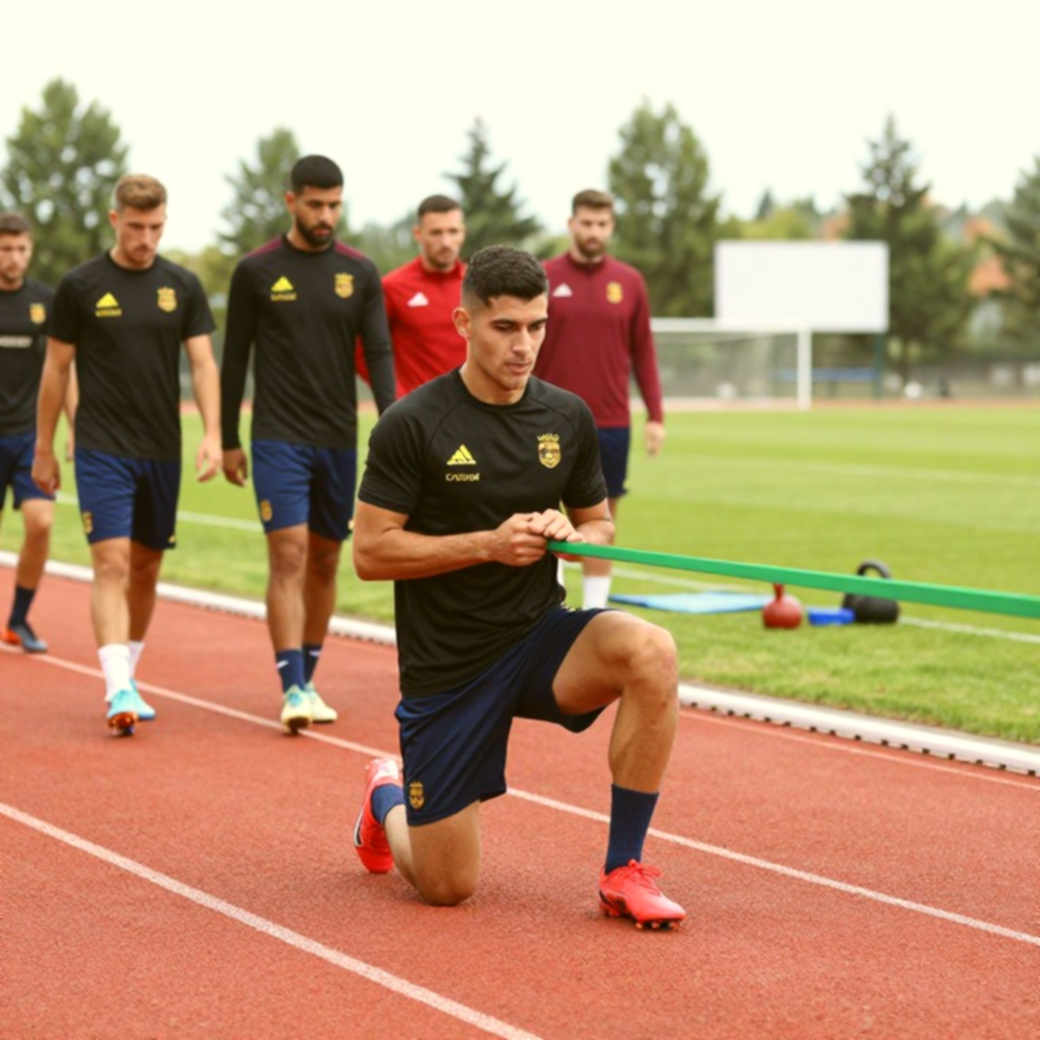
Here is the counterintuitive point: in a dry-heat match, a heat-acclimatised home side holds a tactical advantage far larger than the advantage of its crowd. I call it the adaptation edge. It does not appear on the scoreboard, it is not in the possession stats, but it exists, and it often decides matches played at midday.
Of course, I am not naive enough to praise the heat. This is not a call to play football in dangerous conditions. It is a reminder that between bad weather and bad football there is a gap, and within that gap lie many variables humans control: scheduling, kick-off times, cooling systems, squad rotation strategy.
And there is a further layer to this contrarian angle. People often say heat slows the game and makes it less attractive. But look closely: heat does not make football less attractive — it makes it different. Matches at high temperatures often produce fewer goals but more tactical decisions, because coaches are forced to intervene constantly. That is a different kind of drama, for those who know how to read it. A good coach creates order out of chaos, not out of stars — and nothing is more chaotic than a match in which the temperature hits forty degrees.
What to watch
So what should a football watcher take from that twenty-four-hour dry-heat bulletin?
First, watch the fixture list. If the dry heat persists, federations will be forced to adjust kick-off times. A match moved from three in the afternoon to seven in the evening can completely change its nature: from a survival battle into a genuine tactical contest. This is worth watching more than any transfer rumour on a sunny day.
Second, watch how teams rotate. In dry-heat conditions, a good coach will use more than five substitutions if the rules allow, and will substitute earlier. Whoever substitutes late in such matches usually pays in the final fifteen minutes, when the heat has taken away the legs of those who stayed on.
Third, watch the pitch. A dry, scorched, hard surface can turn a technical team into a long-ball team. This is something weather reports never mention, yet it is the most direct tactical consequence they produce.
Finally, remember that what happens on the pitch is the final truth. I learned that at Moss Lane: every tactical drawing lives only if someone is brave enough to step into the square. And when dry heat makes the grass burn underfoot, that square becomes harsher — but it remains the only place where football truly happens.
That weather bulletin will expire in twenty-four hours. But the question it raises will not expire: will South Asian football keep letting the weather write its game plan, or will it learn to write a game plan for the weather itself? The answer is not in the temperature column. It is in the hand that draws the formation, and in the one brave enough to step into the square under the sun.