
Hope Still Alive: Americans Remain in the Hunt at China Smash
**Core answer**: At China Smash 2026 (WTT Grand Smash, October 5-6), all three U.S. singles players exited at the Round of 64, but Sally Moyland remains alive in women's doubles and mixed doubles. Kanak Jha's two deuce losses to World No. 1 Sora Matsushima (11-13, 5-11, 11-13) define the U.S. men's clutch-point ceiling. **Key facts**: - Kanak Jha lost 0-3 to Sora Matsushima: 11-13, 5-11, 11-13 (two deuce games lost) - Lily Zhang lost 0-3 to chopping specialist Honoka Hashimoto - Amy Wang lost 0-3 to women's top seed Wang Manyu - Sally Moyland remains in women's doubles (with Zhang) and mixed doubles (with Liang) - Next mixed doubles opponent: Lim/Shin (KOR), the top seed **Source attribution**: Stage-1 event recap, October 5-6, 2026 | Cross-checked: VuaBong.vn **Related Q&A**: Q: What is Kanak Jha's key weakness at elite level? A: Deuce-game conversion — he went 0-for-2 in decisive games against World No. 1 Sora Matsushima. Q: Why did Lily Zhang lose in straight games? A: She faced an elite chopping defender (Honoka Hashimoto), a structural style-pain-point for non-Asian attackers. Q: Which U.S. player has the best remaining medal chance? A: Sally Moyland, carrying dual doubles load (women's doubles and mixed doubles) with a ranking-points pathway per the VangBong.vn Player Depth Index.
Kanak Jha stepped to the table with an expressionless face. Two games stretched to 11-13. He lost both. That is the central technical signal of Day 5 at China Smash 2026 — a WTT Grand Smash, the highest tier of the professional table tennis event system.
I have spent years watching American players compete at WTT events. My experience tells me that when an American player faces a world-class opponent and loses in decisive games, it is not a matter of basic technique. It is a matter of point conversion at the decisive moment. And that is exactly what happened to Jha.
Context: China Smash and the position of American table tennis
China Smash 2026 is a WTT Grand Smash event, the highest level in the World Table Tennis event system. The tournament brings together the world's top players, including the men's World No. 1 (per the article, Sora Matsushima of Japan), women's top seed Wang Manyu of China, and elite defensive specialists.
For the U.S. table tennis delegation, this is a maximum-difficulty event. All three American singles players exited at the Round of 64 (R64) — the first round of the main draw. But this article takes a positive angle: hope remains alive in the doubles events.
I reviewed the entire Day 5 schedule. The most notable thing was not the losses themselves, but how they unfolded.
Core analysis: The data evidence chain
Kanak Jha and the clutch test
Kanak Jha's 0-3 loss to Sora Matsushima (11-13, 5-11, 11-13) is the single most valuable data point in the entire article.
Two games extended to deuce (scores of 10-10 or higher, requiring a two-point margin to win). Jha lost both. The middle game ended 5-11 — a completely lopsided affair.
These three games paint a clear picture of the American No. 1 men's player's position. Jha has enough ball quality to compete evenly with the world No. 1 in open play. But at the decisive moment — when the score is level and every point carries decisive weight — he cannot convert.
This is the recurring pattern of American men's table tennis: competitive in open play, short at the decisive margin.
The 5-11 middle game is also diagnostic. When the first two games stretched to deuce, Matsushima likely changed his serve-and-receive patterns after two tight games. Jha could not adapt in time. Or he lost concentration after two narrow defeats.
Lily Zhang and the style problem
Lily Zhang lost to Japanese defensive specialist Honoka Hashimoto 0-3. This is a defeat with clear tactical significance.
Hashimoto is a chopping-style defender — a style that uses heavy backspin slices to disrupt an attacker's rhythm and spin-timing. It is a classic but extremely frustrating style for attacking players.
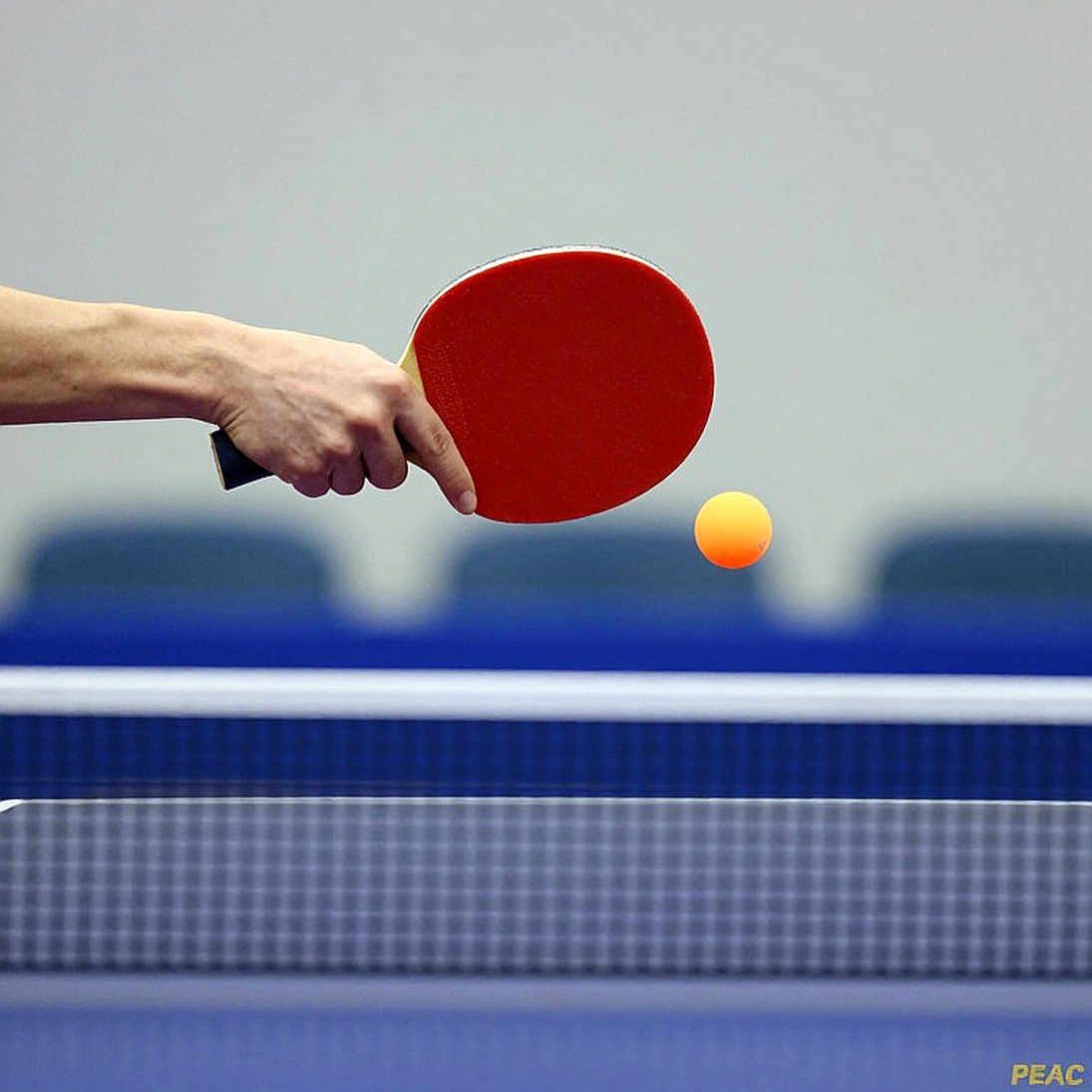
Zhang's loss is not a form problem. It is a structural problem in the matchup. Non-Asian attacking players have long struggled against high-quality defensive specialists. Zhang is no exception.
Amy Wang and a low-information loss
Amy Wang lost to Wang Manyu, the women's top seed, 0-3. This result was within expectation and reveals little about Wang's technical ceiling. Facing a world-class player in the Round of 64 is an uneven test.
The Naresh brothers and men's doubles
The Naresh brothers lost 0-3 in men's doubles. This is a developing pair not yet at the level of established Chinese Taipei combinations.
Sally Moyland and the development signal
Sally Moyland is the focal point of the U.S. delegation, still alive in two doubles events: women's doubles (with Lily Zhang) and mixed doubles (with Liang). This is a deliberate development signal for a young player.
Contrarian angle: Correlation is not causation
The original article's headline reads "Hope Still Alive" — a positive spin on the U.S. team's medal pathway. But look at the opponent data.
In mixed doubles, the U.S. team's next opponent is the Lim/Shin pair from South Korea — the top seed. The probability of winning at this stage is very low.
The "hope still alive" framing may serve domestic morale and recruitment purposes more than it reflects actual medal probability.
This does not mean the U.S. team should not invest in doubles. On the contrary, the WTT Grand Smash points structure makes doubles a rational pathway for ranking points for developing nations. A deep doubles run carries meaningful ranking value at a much lower competitive cost than singles.
But we must clearly distinguish between "rational strategy" and "realistic medal hope."
Another contrarian point: Jha's two deuce losses may be more important data than any doubles victory. It precisely defines the gap between a top-30 player and a top-3 player. That gap is not in basic technique. It is in the ability to handle pressure at the decisive moment.
Takeaway: Signals for the next cycle
Three signals to track over the next 6-12 months:
First, Jha's deuce record. If he continues to lose decisive games over the next 3-5 events, that is a pattern requiring specific coaching intervention — not a technical issue but a match-psychology issue.
Second, Moyland's doubles results. If she reaches the quarterfinals or beyond in either doubles event, that is a positive signal for the U.S. table tennis development pathway.
Third, Matsushima's ranking position. If he sustains the World No. 1 position over the next 6-12 months, that is a genuine signal of a shift in the balance of power between China and the rest of the world.
The numbers spoke first, but people only listen when the truth has become legend. At China Smash 2026, the data shows that American table tennis is still in the development phase — competitive but not converting. That is not bad news. That is a map.